
A Future Teacher Asks: What Is Education Really For?
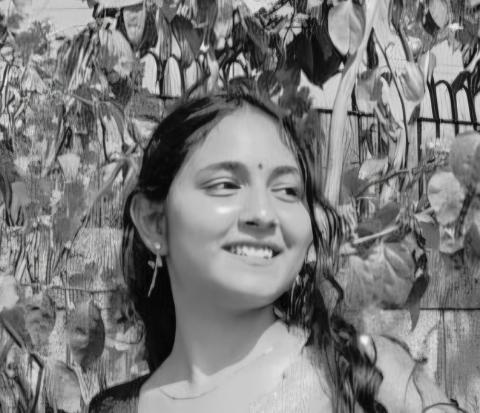
Written by Kanak
I have read your today's writing and I genuinely wanted to have a meaningful conversation about this. As I am a future teacher, one question that genuinely concerns me is: When I become an in-service teacher, will I simply be teaching the syllabus, or will I actually be contributing to the development of a child as an individual?
Despite the efforts made by the government through NEP 2020 and NCF 2023 to promote constructivist approaches, experiential and hands-on learning, and greater emphasis on co-curricular activities, I feel that the ground reality in many schools has not changed substantially. I would not say that these reforms have had no impact, but the fundamental purpose of schooling, to a large extent, still seems to revolve around preparing students to become better employees and be compatible in competitive exams.
However, I believe that this is not merely a problem of the limitations of our educational system. Our society itself is shaped in a way that places academic achievement at the centre of a child's future. Students are often expected to perform well academically because academic success is seen as the safest route towards securing a government job. Government employment, in particular, is associated with stability, security, social status and a respectable life.
Perhaps, at a deeper level, this is also connected to a basic human tendency to compare ourselves with others and seek a sense of superiority or recognition. A government job, being achieved through intense competition where one candidate succeeds over thousands of others, can sometimes become more than just employment—it becomes a symbol of achievement and social respect.
Recently, I was listening to a podcast about the purpose of education, and one thought particularly stayed with me: “Before making a child learn, schools should first try to understand what kind of learner that child is.” This brought me to my second concern. Is our education system actually designed to identify and nurture the individuality of every learner, or is it primarily designed to teach students facts, formulas, information and procedures?
From what I observe, the latter still seems to dominate in many classrooms. Students are taught how to solve a mathematical problem, reproduce information in an examination, or remember facts, but comparatively less attention is given to discovering their interests, recognising their individual capabilities, understanding how they learn best, and identifying the areas in which they can genuinely flourish.
And this brings me to what I feel is perhaps the most important question:
Do we educate children merely to make them better employees, or do we educate them to become better human beings—individuals equipped with the skills, confidence and freedom to think independently, express their ideas fearlessly, explore their creativity and build a meaningful, satisfying and happy life?
As a future teacher, I do not have a definitive answer to this question yet. But I feel that asking it is important, because the purpose of education should perhaps be examined not only from the perspective of employment and economic productivity, but also from the perspective of human development and the quality of life we want our children to experience.
Of course, this is my perspective. However, whenever I have discussed the Indian education system with people from different backgrounds—family members, friends, teachers, corporate professionals and students—I have often encountered remarkably similar concerns and perspectives. Perhaps that itself is something worth reflecting upon: if people from such different walks of life are asking similar questions about education, then maybe the conversation about what education should truly accomplish is one that deserves much greater attention.
- Log in to post comments