
When Everything Gets a Brain
AI is making headlines almost every day. And most of those headlines are about how a particular task, which was once considered difficult, can now be done by AI. If we pause and look at history, we find parallels. The closest one that comes to my mind is the introduction of the steam engine in the middle of the 18th century. That invention made everything motorable. If you add an engine to any immobile thing, it becomes mobile. That was revolutionary. It totally changed the world. In many ways, the world that we inhabit today is the world that was brought by the steam engine. It led to the development of the factory system, and of course, several other transformations followed. Today, almost everything that reaches us is factory-mediated—the food we eat, the water we drink, the clothes we wear. Whatever we use in our daily lives is, in some way, industrially produced. That is how deeply it impacted life across the globe; it changed the way people live.
This is the time now when AI is going to do something similar. The change initiated by the steam engine took nearly 200 years to reach every corner of the world. With AI, the pace is much faster. What the steam engine did was add “legs” to everything—everything could move. AI is adding a “brain” to everything. Now things can decide where to move and how to move.
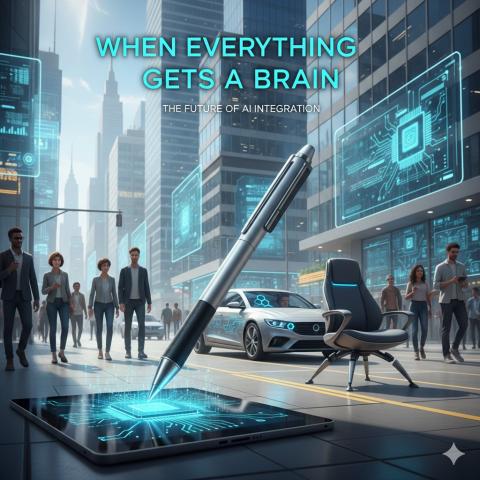
Suppose I am writing with a pen. An AI-integrated pen can observe me for a few minutes and then write by itself. If I am driving, an AI-integrated car can observe for a while and then drive itself. Around 250 years ago, the steam engine enabled immobile things to move. Now, the AI revolution is enabling things to think. Gradually, AI will get integrated into every aspect of our lives. Things around us will have both mobility and a brain.
We are no longer in a world where only biological beings—humans and animals—move with brains. We are entering a world where several non-biological entities will move alongside us, with increasing capacities to move and think. That is the world we are stepping into. The question, then, is: where does this leave human civilization, which has evolved over millions of years? I see AI as adding another member to the ecosystem that we have been cohabiting. It will be fascinating to see how our interaction and engagement with this AI-enabled world unfolds. What I sense emerging is an AI-mediated world around all of us.
Non-biological entities can move and think; they can decide where to go and how to go. But the “why” to go—that remains deeply human. This “why” emerges from multi-layered socio-cultural, psychological, and philosophical contexts. At least for now, this layer is still missing in AI. An AI-enabled chair might move and decide where to go. But why should I go there—that is still difficult. That “why” involves meaning-making between people, between groups, between shared codes of understanding. How AI enters into this meaning-making process with humans will be interesting to observe. And that is why this is such a compelling time to be alive.
Of course, with the power that AI is bringing, we can leverage it across multiple fields. At the same time, we must remain attentive to concerns about security, privacy, and accountability. History reminds us that car manufacturers introduced speed first; seat belts came later. Safety concerns eventually had to be addressed. Similarly, in this AI-enabled world, safeguards will need to evolve. For now, perhaps this is the moment to engage with openness—to leverage its power thoughtfully, critically, and creatively—in all spheres of our lives.
- Log in to post comments